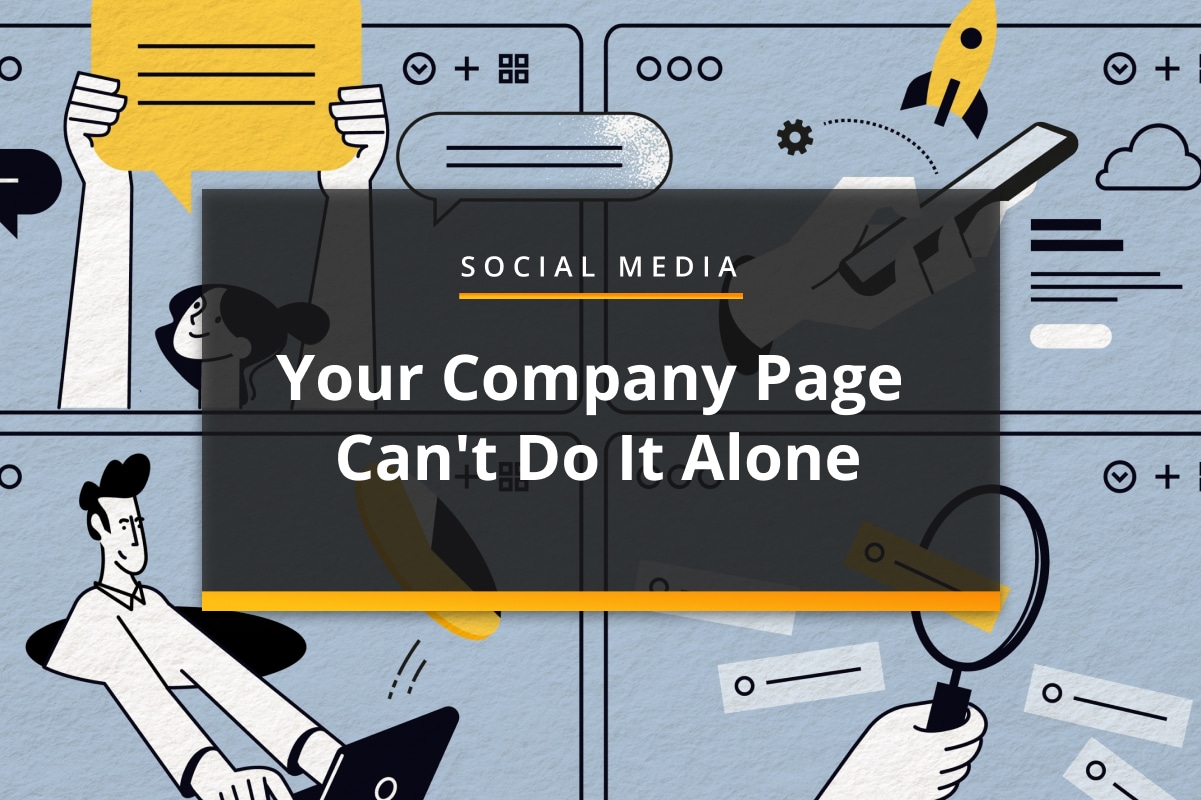
Introduction: I Scroll Past Logos. I Stop for People.
I’ll be the first to admit something about my own LinkedIn habits. When a company page pops up in my feed with a polished graphic and a headline about “exciting news,” my thumb typically keeps moving. But when someone I know posts about a lesson they learned on a tough project, or a win their team pulled off, I stop. I read it. Sometimes I react or even comment.
I don’t think I’m unusual. Most of us are wired to pay attention to people, not logos.
That’s the whole idea behind employee advocacy. Your company page matters. It’s the foundation of your brand’s presence on social. But on its own, it can only go so far. Your people can take it further: the engineers, project managers, salespeople, and leaders who already have networks full of the exact buyers, partners, and future hires you want to reach.
In this post, we’ll cover why your company page still matters, how your team’s voices can carry it further, what a healthy employee advocacy program actually looks like, and how to get started without making it feel forced.
Your Company Page Is the Foundation, Not the Whole Strategy

Most B2B company pages are doing everything “right.” They post consistently, use on-brand graphics, and share news, blogs, and event photos. And yet the engagement numbers stay stubbornly flat, which can leave you wondering, “Is this even worth it?!”
It’s not because the content is bad. It’s because the platforms are built that way.
Social algorithms, especially LinkedIn’s, favor conversations between people. Posts from personal profiles tend to earn more visibility than posts from brand pages, because that’s what users come to the platform for. A company page is competing for attention in a feed designed for humans.
I think of it like the ’80s movie Honey, I Shrunk the Kids. On LinkedIn, personal profiles are the grown-ups and brand pages are the kids, shrunk down to almost nothing. They’re still there, but getting noticed takes a lot of extra effort.
Then there’s the math. According to LinkedIn’s own guide to employee advocacy, employee networks have, on average, 10 times more connections than a company has followers. LinkedIn also found that content earns twice the click-through rate when an employee shares it instead of the company. Even a team of 15 people can easily reach a network many times larger than your company page, and it’s a network made up of peers, clients, vendors, and industry contacts.
That’s not a knock on your company page. It’s a reason to give it some backup.
Why Your Company Page Still Matters
Before we go any further, let me be clear: employee advocacy doesn’t replace your company page. It amplifies it. Your page still does important work that no individual profile can:
- It’s where people go to check you out. When a prospect, partner, or job candidate hears your name, your company page is one of the first places they look. An active, well-maintained page signals that you’re credible and current.
- It’s the source of shareable content. Blogs, case studies, event recaps, and company news need a home base. Your page is where that content starts before your team carries it into their networks.
- It powers your paid social. Ads on LinkedIn, Facebook, and Instagram run through your company page. If you’re investing in paid social, a strong page makes those campaigns more effective.
- It shows up in search, including AI search. Social profiles and posts are increasingly surfacing in search results and AI tools. We cover that in why your social posts are showing up in AI search results.
- It tells your brand story consistently. Your page sets the tone, voice, and visual identity your team can build on. (Our blueprint for social media brand consistency goes deeper here.)
The best results come when the two work together. Your page publishes the content, your team shares it with their own perspective, and their networks find their way back to your page. Each one makes the other stronger.
If you’re also stretched across too many platforms, start with our take on why you don’t need to be on every social media platform.
People Trust People (Especially in B2B)

Reach is only half the story. The bigger advantage is trust.
B2B purchases are rarely impulse buys. They involve long sales cycles, multiple decision-makers, and a lot of quiet research before anyone fills out a contact form. During that research phase, buyers are looking for signals that you know what you’re doing and that you’d be good to work with.
Your company page saying “we’re experts” sets the stage. An engineer explaining how she solved a tricky problem for a client backs it up.
Research backs this up. McKinsey has found that word of mouth is the primary factor behind 20 to 50 percent of all purchasing decisions. And the 2026 Edelman Trust Barometer found that “my employer” is the most trusted institution, trusted by 78 percent of employees, well ahead of business and government in general. When your team shares their work, they’re extending a little of their personal credibility to your brand.
We’ve talked before about how your followers and their word-of-mouth are your best marketing tool, and how influencers build trust and expand reach. Employee advocacy is the same principle, just closer to home. Your best influencers might already be on your payroll.
Straight shooting it: People don’t build relationships with logos. They build relationships with the humans behind them. Social media just makes those humans easier to find.
What Employee Advocacy Actually Looks Like
When some people hear “employee advocacy,” they picture a weekly email asking everyone to like and share the latest company post. That’s not advocacy. That’s a chore.
Real employee advocacy is your team showing up on social media as themselves, talking about the work they do and the industry they know. Sometimes that means sharing company content. More often, it means sharing their own perspective.
Here’s what it can look like in practice:
- A project manager posting about how her team kept a complex launch on schedule, and what she learned along the way
- An engineer or developer explaining a common mistake he sees and how to avoid it
- A salesperson sharing a useful resource with a short note on why it matters to the people she works with
- A leader offering an honest take on an industry trend or a business decision
- Anyone on the team celebrating a coworker, a client win, or a company milestone in their own words
Notice what these have in common. They’re useful, specific, and personal. None of them read like a press release.
The goal isn’t to turn your team into marketers. It’s to help them share the expertise they already have. Every one of these posts is a small piece of storytelling, and stories from real people are what break through crowded feeds.
Start With Your Leaders

If you want your team to show up on social, your leadership has to go first.
Employees take their cues from the top. If the owner, president, or department heads are visibly active, sharing ideas and engaging with others, it signals that this is valued and safe. If leadership is silent, most employees will be too.
There’s also a business case here. Buyers want to know who’s behind a company, especially in industries where relationships drive decisions. A leader who regularly shares how they think about the industry, their customers, and their team becomes a familiar face before a sales conversation ever happens.
A few places for leaders to start:
- Clean up the profile. A clear headline, a current photo, and an About section that speaks to who you help. Our guide to LinkedIn profile optimization walks through the details.
- Pick two or three topics to own. Consistency builds recognition. It’s better to be known for a few things than to post about everything.
- Engage before you post. Thoughtful comments on other people’s posts build visibility and relationships, and they’re far less intimidating than writing from scratch.
- Show some personality. The posts that perform best usually sound like a real person talking, not a corporate announcement.
For more on building a personal brand as a leader, listen to our podcast episode on Personal Branding: The Artist Becoming the Art. And if your sales team is ready to take it further, our episode on social selling best practices is a great next step.
Make It Easy (and Optional)
Most employees aren’t avoiding social media because they don’t care. They’re avoiding it because they’re busy, unsure what to say, or worried about saying the wrong thing. A good employee advocacy program removes those barriers.
- Make it voluntary. Advocacy only works when it’s genuine. Invite people in, celebrate those who participate, and never make it a requirement.
- Give simple guidelines, not a script. A one-page set of social media guidelines covering what’s okay to share (and what isn’t, like client details or confidential work) gives people confidence without stripping out their voice.
- Provide a starting point. Share a short list of company content each month with a suggested angle, and encourage people to add their own take instead of copying and pasting.
- Offer prompts. Questions like “What’s something you wish clients knew about your job?” or “What did you learn on your last project?” make it much easier to get started.
- Help with the basics. A quick lunch-and-learn on profiles, posting, and commenting can go a long way for team members who are less comfortable on social. If creativity is the hurdle, our post on being creative on social media is a good place to start.
- Recognize participation. A shout-out in a team meeting or an internal channel shows people their effort is noticed.
It also helps to connect advocacy to your broader strategy. When your team’s posts reinforce the same themes as your website, email, and paid campaigns, the whole thing works harder. That’s the heart of integrated social marketing.
What Not to Do
Employee advocacy can backfire when it’s handled poorly. A few common missteps to avoid:
- Mandating posts. Required sharing produces exactly the kind of content people scroll past, and it can quietly breed resentment.
- Handing out canned copy. When ten employees post the same caption on the same day, it’s obvious. It also undermines the authenticity that makes advocacy valuable in the first place.
- Leaning on AI to write it all. AI can help someone brainstorm or tighten a draft, but posts that sound generated defeat the purpose. (We get into this more in Agency or AI: Why Hire a Digital Marketing Agency for Help.)
- Only sharing promotional content. If every post is a sales pitch, people will tune out. Aim for a mix that leans heavily toward helpful and human.
- Ignoring the people who participate. If someone puts themselves out there and no one internally notices, don’t be surprised when they stop.
How to Know If It’s Working
Employee advocacy is a long game. You won’t see a flood of leads after the first month, and that’s okay. Like most relationship-driven marketing, the value builds over time.
Instead of fixating on likes, watch for signals that your team’s presence is making an impact:
- Growth in participation. Are more employees posting and engaging over time?
- Reach and engagement on employee posts. How far is your content traveling compared with your company page alone?
- Company page follower growth. Active employees often bring new followers to the brand page with them.
- Website traffic from social. Are more people visiting your site from LinkedIn and other platforms?
- Sales conversations. Are prospects mentioning that they’ve seen your team’s posts? Are inbound inquiries coming from people connected to your employees?
- Recruiting interest. A visible, engaged team is one of the best employer brand assets you can have.
Some of the most meaningful results won’t show up neatly in a dashboard. A prospect saying “I’ve been following your team’s posts for months” is hard to track, but it’s exactly the kind of outcome you’re working toward. For a deeper look at which numbers matter, see our guide to the social media metrics you should track and what your marketing report should actually tell you.
Your People Are Your Brand

Your company page tells people what you do. Your employees show them who you are. The strongest brands on social have both working together.
In a feed full of polished graphics and AI-generated posts, real people sharing real expertise stand out. They extend your brand into networks your page can’t reach on its own, and they carry a level of trust no ad can buy. You don’t need a big budget or a complicated platform to start. You need a few willing voices, some light structure, and leadership that’s willing to go first.
Start small. Invite a handful of people. Give them support and recognition. Keep your company page strong, then let your people carry it further than it could ever go alone.
Ready to Get Your Team Talking?
If you’d like help building an employee advocacy program or a social media strategy that brings your people to the forefront, let’s start a conversation.

Related Articles:
“What Should We Stop Doing?”: The Most Overlooked Question in…
When it comes to marketing strategy, most conversations start with the same question: What should we be doing? Should we invest more in SEO? Start…
From “What Happened?” to “What’s Next?”: How Marketing Reporting Keeps…
Every month, businesses receive marketing reports filled with charts, percentages, increases, decreases, comparisons, and a suspicious number of acronyms. After looking at all those numbers,…

Why Your Social Posts Are Showing Up in AI Search…
Your potential customer isn't just searching for your company anymore on Google. They're looking at Chat GPT, Claude, Gemini, and other AI search engines. Instead…

Most Popular Articles
How to Use Email Analytics and Metrics to Measure Success
Email marketing remains one of the most effective digital marketing strategies, but success doesn't come from simply sending messages out into the abyss. To truly…

Seeing Favicons in Your Google Search Results? Here’s Why…
Have you noticed anything different in your Google Search results lately? Google added tiny favicon icons to its organic search results in January. It was…

AI or Agency? The pros and cons of a human touch vs artificial intelligence in web design
Your organization’s website is a critical marketing channel. It’s the first impression many customers have of your business and it plays a vital role in…