When I stepped into the world of Digital Marketing as a Project Manager, one of the first things I noticed wasn’t timelines or workflows.
It was the acronyms. SEO. MQL. ICP. ROI….it felt like alphabet soup.
Marketing, especially in the B2B world, runs on shorthand. While that language is efficient once you understand it, it can feel like stepping into a conversation already halfway finished if you don’t.
As someone relatively new to the marketing and business world, I quickly realized that understanding these terms wasn’t just helpful; it’s essential. Clear communication drives strong strategy, and strong strategy drives results.
So whether you’re new to marketing, new to B2B, or just tired of Googling terms mid-meeting, here’s a straightforward breakdown of the foundational acronyms you’ll hear, and why they matter.
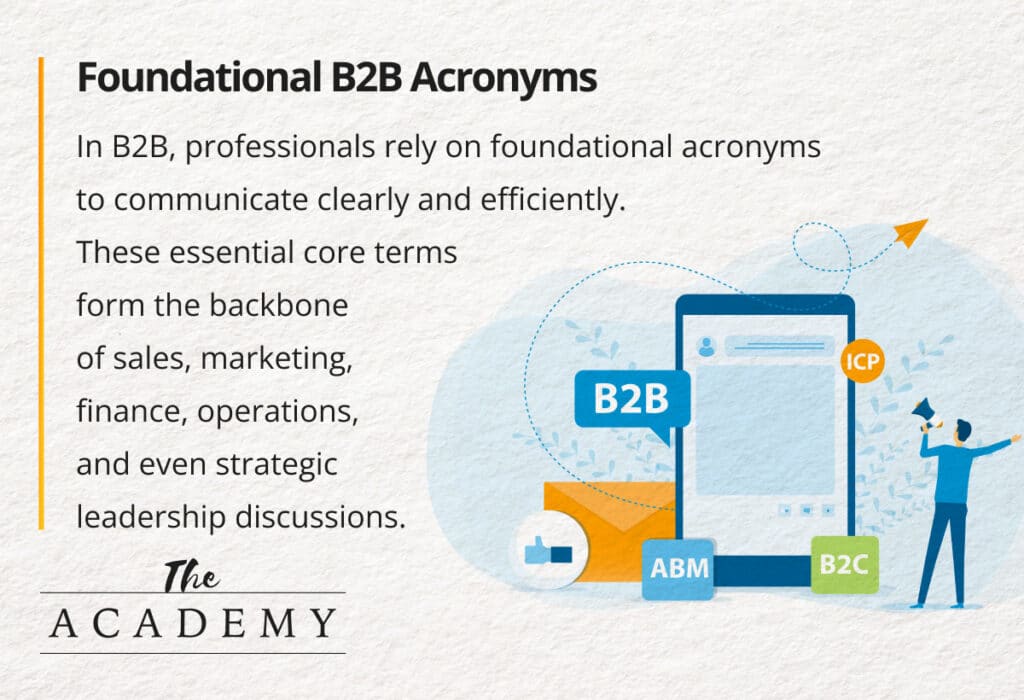
Foundational B2B Acronyms
A company that sells products or solutions to other businesses. B2B buying decisions tend to be more complex than consumer purchases. There are longer sales cycles, multiple decision-makers, budget approvals, and (often) several meetings that possibly could have just been emails.
- B2C: Business-to-Consumer
A company that sells directly to individual consumers. B2C marketing often leans into emotion, convenience, and quicker buying decisions. Understanding whether your business is B2B or B2C shapes everything, from your messaging to your marketing channels to your target audience.
- ICP: Ideal Customer Profile
A detailed description of the type of company that is the best fit for your solution.Your ICP outlines industry, company size, revenue range, geography, and common challenges. Without a clear ICP, marketing can start to feel like shouting into the internet void and hoping the right person hears you. With one, strategy becomes focused and far more efficient!
- ABM: Account-Based Marketing
A strategy that focuses marketing efforts on specific high-value target accounts instead of broad audiences. Rather than marketing to “everyone who might possibly be interested,” ABM narrows in on companies that closely match your ICP and designs outreach specific to those companies. It’s targeted, personalized, and particularly effective in B2B sales environments.
Marketing & Digital Acronyms

The process of improving your website so it ranks higher in search engine results. SEO includes optimizing content, strengthening technical performance, and building authority so your business shows up when potential clients search for relevant solutions. In other words: helping Google understand that you know what you’re talking about.
- CTA: Call to Action
A prompt that encourages someone to take the next step. Examples include “Contact Us,” “Schedule a Demo,” or “Download the Guide.” Because B2B purchases rarely happen in a single click, effective CTAs guide prospects step-by-step toward a decision.
A type of online advertising where businesses pay each time someone clicks their ad. PPC campaigns allow for precise targeting by industry, job title, and search intent. They can generate faster visibility than organic efforts, as long as they’re strategically managed. Our strategists often refer to PPC campaigns as “turning on a faucet,” where you can expect an immediate jump in traffic.
The platform used to build and manage your website content. Examples include WordPress, Hubspot, Squarespace, and Wix. Your CMS affects how easily you can update content, optimize for SEO, and integrate marketing tools. The right system creates flexibility. The wrong one creates….conversations. (Our designer and developer can confirm).
Sales & Revenue Acronyms

- CRM: Customer Relationship Management
A system used to track interactions with leads and clients. CRMs keep marketing and sales aligned by organizing pipelines, logging conversations, and tracking progress. Without one, things can get…chaotic.
- MQL: Marketing Qualified Lead
A contact who has engaged with marketing efforts and is considered more likely to become a customer. Engagement might include downloading resources, attending a webinar, or visiting key pages on your site multiple times. MQLs indicate interest, but aren’t ready for direct sales outreach yet; they’re still being “nurtured” with helpful content.
- SQL: Sales Qualified Lead
A lead that has been vetted and is ready for direct sales follow-up. Vetting usually includes confirming that they fit your ICP, have engaged with key content, and are actually in a position to buy. Identifying SQLs helps sales teams focus their time on the most promising opportunities.
A measurable value used to evaluate progress toward a goal. In B2B marketing, KPIs track whether your efforts are moving the needle on key activities, like website traffic, lead generation, or conversion rates. Think of KPIs as the signals that tell you whether your strategy is on track, and whether it’s likely to produce a strong ROI.
A measure of the return generated from money spent on marketing or other efforts. ROI shows whether your campaigns are delivering tangible value relative to their cost. In B2B, where sales cycles can be long, KPIs act as checkpoints along the way: if your KPIs are moving in the right direction, you increase the chances of a positive ROI. Tracking ROI ensures that marketing decisions are tied to real business outcomes, not just activity or vanity metrics.
The total revenue a business expects to earn from a client over the duration of the relationship. LTV helps companies evaluate the long-term impact of acquiring a customer, which is especially important in B2B where contracts and partnerships can last years. Comparing LTV to acquisition costs allows teams to prioritize high-value clients and plan marketing investments that will pay off over time.
Why Understanding These Acronyms Matters

At the end of the day, B2B marketing is not about throwing around impressive acronyms to sound informed in a meeting. It is about understanding what those acronyms actually represent.
Yes, B2B conversations can sometimes feel like alphabet soup. One minute someone is reviewing CMS updates, the next they are discussing LTV projections or PPC KPIs. It’s easy to nod along and hope no one asks questions.
So, whether you are discussing KPIs in a leadership meeting, reviewing ROI in a report, or determining if a lead should move from MQL to SQL, remember this: behind every acronym is just a team trying to grow responsibly and strategically.
And if nothing else, at least now you can decode the next B2B conversation without silently Googling under the table like I did.

Related Articles:
Digital Marketing Strategy Tips for Nonprofits (From Someone Who Gets…
This one’s for my nonprofit friends. I know you’re doing a million things, and digital marketing probably isn’t at the top of your list today……
Why Your Website Is the Center of Your Inbound Marketing…
Many companies invest in digital marketing tactics like social media, email campaigns, and paid advertising. But without a strong website at the center of those…

What Your Marketing Report Should Actually Tell You
When you invest in digital marketing, you expect to see results. Reporting is one of the primary ways those results are communicated. Each month, a…



Most Popular Articles

Seeing Favicons in Your Google Search Results? Here’s Why…
Have you noticed anything different in your Google Search results lately? Google added tiny favicon icons to its organic search results in January. It was…

AI or Agency? The pros and cons of a human touch vs artificial intelligence in web design
Your organization’s website is a critical marketing channel. It’s the first impression many customers have of your business and it plays a vital role in…

Business Growth and Digital Marketing News & Tips 11-17-24
Are you encouraging and rewarding innovation? Lee Cockerell is the former Executive Vice President of Operations at Walt Disney World. A lover of traditional red…